Dissecting the Titanium and Titanium Alloy Industry Chain
Aug 07, 2026
Titanium is undergoing a transformation-from a corrosion-resistant pipe material in the chemical industry to a strategic structural metal in the aerospace field. By 2025, China's titanium processed material output will reach 186,000 tons, accounting for 65% of the global total, and its sponge titanium output will reach 280,000 tons, achieving nearly 100% self-sufficiency. Baoji, known as "China's Titanium Valley," alone accounts for 39.5% of the national production capacity-these three figures point to the same conclusion: China is now the absolute production center of the global titanium industry.
However, large production capacity does not equate to strong capability-the purity of aerospace-grade TC4 titanium alloy smelting, the compositional consistency of large-sized titanium ingots, and the surface quality of ultra-thin titanium strips remain three major hurdles hindering high-end breakthroughs. The mass delivery of the C919 (each aircraft uses approximately 15-20 tons of titanium), the 25% titanium usage in fourth-generation fighter jets, and the pressure hull of the 4500-meter-class deep-sea space station (requiring 2200 tons of titanium per project)-these three major demands are propelling titanium from a "niche specialty metal" to a "standard component of major national projects."
Industry Characteristic 1: Structural Differentiation of "Military Hot, Civilian Cold" – High-end Demand Booms While Traditional Sectors Slump. In 2025, China's titanium industry will exhibit an extremely polarized "two extremes": demand from the military and aerospace sectors will increase by 22% year-on-year, while demand from traditional civilian sectors such as chemicals and construction will decline by 5%. This differentiation is not a cyclical fluctuation, but a fundamental restructuring of downstream demand – titanium is shifting its identity from "chemical corrosion-resistant material" to "aerospace strategic metal."
Industry Characteristic 2: China is the Absolute Production Center of the Global Titanium Industry – Processed Materials Account for 65% of Global Output, Sponge Titanium Self-sufficiency Nearly 100%. In 2024, China's titanium processed material output was 172,000 tons, accounting for 65% of the global total, and is projected to reach 186,000 tons in 2025. Sponge titanium output was 256,000 tons (2024), with a self-sufficiency rate approaching 100%. Baoji, Shaanxi, known as "China's Titanium Valley," produced 68,000 tons of titanium processed materials, accounting for 39.5% of the national total – one city contributing more than a quarter of the world's titanium material production capacity. However, the export structure reveals hidden concerns: imports of titanium plates thicker than 0.8mm decreased by 12% (indicating self-sufficiency in low-to-mid-range products), while high-end aerospace-grade titanium alloy bars still require partial imports.
Industry Characteristic Three: C919 + Deep-Sea Equipment + Medical Implants – Three Emerging Demands Open Up Growth Ceilings. The C919 domestically produced large passenger aircraft will deliver 22 aircraft by 2025, with each aircraft using approximately 15-20 tons of titanium (accounting for 9% of the fuselage weight), and titanium material orders scheduled until 2028. The 4500-meter-class deep-sea space station pressure cabin requires 2200 tons of titanium material per project, with a compressive strength requirement of 1100MPa. Domestic orthopedic implants used 2600 tons of titanium, a year-on-year increase of 18%, and the penetration rate of 3D-printed titanium alloy spinal implants jumped from 8% in 2019 to 25% in 2023. In terms of development stage, China's titanium industry is in a critical leap period from "world's largest production capacity to high-end self-sufficiency and controllability."
Over the past two decades, China has achieved a remarkable accumulation of production capacity, going from nothing to something – achieving 100% self-sufficiency in sponge titanium and accounting for 65% of the global market share in titanium processed materials. Currently, it is undergoing a quality upgrade from large-scale to strong – with a 40% year-on-year increase in aerospace-grade 0-grade sponge titanium production, an increase in the application rate of EB furnace smelting technology to 33%, and the shipment of 3D printing titanium powder exceeding 800 tons for the first time. The core contradiction at this stage is the coexistence of overcapacity in low-end production and insufficient supply in high-end production, with industry competition shifting from "competing on production scale" to "competing on technological barriers."
2. Upstream: Titanium Ore · Sponge Titanium · Resource Recycling Titanium Ore Mining: Panzhihua-Xichang region holds 60% of the reserves – the resource paradox of "rich ore, poor titanium." Titanium is the fourth most abundant metal in the Earth's crust (0.63%, after aluminum, iron, and magnesium), but it exists almost entirely in oxide form – ilmenite and rutile are two major minerals, with extremely high refining difficulty. Global titanium ore resources are highly concentrated, with Australia, South Africa, and China accounting for over 70% of global reserves. China's titanium resources are highly concentrated in the Panzhihua-Xichang area of Sichuan Province, where vanadium-titanium magnetite reserves account for over 60% of the national total, making it the "lifeline" of China's titanium industry. However, the Panzhihua-Xichang titanium mine has a fatal weakness: low grade and high impurity content. The TiO₂ content of the primary ore is only 10-15%, far lower than the 50-65% found in Australian placer deposits. This means that to produce the same amount of titanium concentrate, several times the amount of ore needs to be processed, naturally leading to higher beneficiation costs. In 2025, China's titanium concentrate production is projected to reach 3.2 million tons (up 8.3% year-on-year), but it will still need to import 3.98 million tons (up 3.4% year-on-year) – a dependence on imports exceeding 50%. Even more challenging is the near-complete reliance on imports for rutile (a key raw material for producing high-end sponge titanium), with 850,000 tons imported annually, mainly from South Africa and Sierra Leone, at an average price of US$12,000 per ton, a year-on-year increase of 5.2%.
② Sponge Titanium Smelting: 280,000 Tons of Production, Ranking First Globally – Structural Upgrade of "Large Quantity and Improved Quality" Sponge titanium is a core intermediate product in the titanium industry chain – porous metallic titanium with a sponge-like appearance and a purity of over 99%, serving as the starting point for all titanium material processing. China's sponge titanium production is projected to reach 280,000 tons in 2025 (256,000 tons in 2024, a year-on-year increase of 17.6%), accounting for 62% of global production, with a self-sufficiency rate approaching 100%. China has become the world's absolute center of sponge titanium production capacity. What truly deserves attention is the structural upgrade rather than the overall increase in quantity: the production of aerospace-grade 0-grade sponge titanium reached 28,000 tons, a year-on-year surge of 40%, with purity control reaching the internationally advanced level of H content ≤12ppm and O content ≤150ppm – marking China's breakthrough in the high-end sponge titanium field, breaking the long-term monopoly of Russia's VSMPO and the US's Timet. However, the production capacity of ordinary-grade sponge titanium continues to expand, leading to a supply-demand mismatch of "high-end shortage and low-end oversupply"-the price of grade 0 sponge titanium has risen to 52,000 yuan/ton, while ordinary-grade has fluctuated weakly around 45,000 yuan/ton.
③ Titanium Resource Recycling: 35% Utilization Rate of Recycled Materials-From "Scrap Materials" to "Second Mine," titanium recycling is upgrading from "waste treatment" to a strategic resource recycling system. Baowu Group's "Titanium Alloy Recycled Material Recycling System" aims to achieve a 35% recycling rate by 2025, reducing sponge titanium production costs by 15%. Baoji's "China Titanium Valley" has built a circular economy industrial park, increasing the titanium scrap recycling rate to 92% and reducing energy consumption per ton of titanium material by 0.9%. The economic logic of titanium scrap recycling is straightforward: the cutting waste (titanium scrap) from titanium material processing contains over 90% titanium, and the cost of remelting it is only 60-70% of that of virgin sponge titanium. However, the challenge lies in composition control-mixing different grades of titanium alloy scrap together can contaminate smelting batches, requiring a strict classification, collection, and testing system. Baoji's circular economy industrial park has solved this problem by establishing a closed-loop chain of "generation-classification-testing-recycling," forming an internal circulation model of "resources-products-recycled resources."
3. Midstream: Titanium Ingot Smelting & Titanium Material Processing ① Titanium Ingot Smelting: VAR+EB Dual-Furnace Process-A Qualitative Change from "Can Cast" to "Cast Well" Titanium ingot smelting is the most technically demanding link in the entire chain-titanium is extremely reactive at high temperatures, reacting with almost all crucible materials, and must be smelted in a vacuum or inert atmosphere. Currently, there are two main processes: Vacuum Arsenic Arc Furnace (VAR) and Electron Beam Cold Hearth Furnace (EB furnace). VAR is the most mature process in China, suitable for producing round titanium ingots; the EB furnace can remove both high-density and low-density inclusions, making it more suitable for high-end aerospace titanium alloys. The 15-ton electron beam cold hearth melting furnace built by BaoTi Group is currently the largest EB furnace in China, capable of producing large-size aerospace titanium alloy ingots, significantly improving purity and consistency.
BaoTi overcame the problem of compositional segregation in TC4 titanium alloy through a "VAR+EB" dual-furnace combined process, increasing the ingot yield from 85% to 95% and reducing the production cost per ton of titanium ingot by 0.9%. Western Superconducting Technologies adopted the same dual-melting route, achieving a batch pass rate of over 95% for aerospace-grade titanium alloys. The "dual-furnace process" has become the standard configuration for high-end titanium materials-VAR alone can no longer meet the quality requirements of aerospace customers. The core pain point in the melting process is "compositional segregation"-the density differences of elements such as aluminum and vanadium in titanium alloys lead to uneven distribution during solidification, directly affecting the consistency of the mechanical properties of subsequent forgings. An aircraft has hundreds of titanium components; if the performance of each batch fluctuates, airlines dare not use them.
The "cold hearth" design of the EB furnace allows the titanium liquid to be fully stirred and mixed before solidification, fundamentally solving this problem. In 2025, the application rate of EB furnace melting technology in high-end titanium alloys has increased to 33%, and is expected to exceed 50% in the next three years-a key indicator of China's titanium materials moving from "usable" to "highly usable." ② Titanium Plates: Largest Category at 23.2%-Wide-width Thin Plate Technology Fills a Gap. Titanium plates are the largest category of titanium processed materials, accounting for 23.2% of total production, ranking first alongside titanium rods. Titanium plates are used across three major scenarios: aerospace skins, chemical containers, and marine engineering plates. The biggest technological breakthrough in the titanium plate field in 2025 came from Panzhihua Iron and Steel Group-the developed 0.8mm pickled titanium coils achieved a 100% pass rate, a comprehensive yield of 98.5%, and a surface defect rate of less than 3%, exceeding international standards. The products have been applied to nuclear power plant evaporators and marine engineering pipelines. An even more crucial breakthrough is ultra-wide titanium plates-Baoji Titanium Industry Co., Ltd. developed titanium plates with a width of 370mm × 1600mm for the pressure chamber of a 4500-meter deep-sea space station, filling the domestic demand gap for ultra-wide titanium plates.
Nuclear Power New Materials' large-coil, wide-width titanium strip technology has enabled domestically produced titanium strips to break through the 0.02 mm thickness barrier, filling a gap in the electronics and information field. Titanium plates are developing from "mainly thick plates" to a comprehensive approach of "wide width + ultra-thin + high precision." ③ Titanium rods: the "skeleton" of aero-engines-TC4 price 180-200 yuan/kg, added value rate 35%+. Titanium rods are the highest value-added titanium material category-especially aerospace-grade TC4 titanium alloy rods (Ti-6Al-4V), which are the core raw materials for aero-engine compressor blades, discs, and aircraft landing gear structural components. In 2025, the price of TC4 titanium alloy will stabilize at 180-200 yuan/kg, with an added value rate of over 35%-far higher than the 15-20% of ordinary titanium plates. BaoTi Co., Ltd. has high-end titanium alloy orders for the C919 and fourth-generation fighter jets scheduled until 2028, with military orders accounting for over 40%.
Another breakthrough for titanium rods is in titanium powder for 3D printing-global shipments of 3D printing titanium powder are expected to exceed 800 tons for the first time in 2025, with China's share continuing to rise. Complex titanium alloy structural parts manufactured using selective laser melting (SLM) have seen their manufacturing cycle shortened by more than 60% and costs reduced by 40%, and are already being used on a large scale in aero-engine blades and medical implants. The alternating parameter forming process developed by Northwestern Polytechnical University has achieved 100% equiaxed grain structure in TC4 titanium alloy, reducing mechanical property anisotropy to 5%-crucial for the large-scale application of 3D printed titanium components. Titanium rods are a "touchstone" for evaluating a country's titanium industry level-being able to manufacture titanium plates is only the beginning; being able to stably mass-produce aerospace-grade titanium rods is the true mark of success. Hunan Jintian Titanium Industry's ultra-high strength and toughness titanium alloy has achieved a breakthrough in strength and toughness for the first time in China, and its aerospace-grade titanium alloy forgings have successfully entered the Airbus supply chain, while also making key progress in the C919 qualified supplier certification. This means that China's high-end titanium materials are no longer just "self-produced and used," but are beginning to possess international competitiveness.
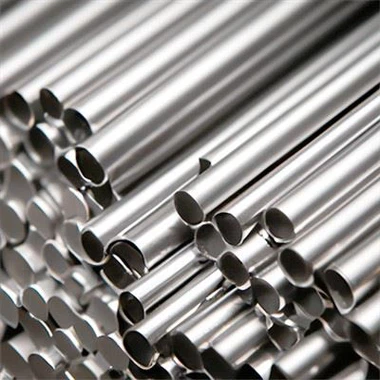
④ Titanium Tubes, Titanium Wires, and Forgings – Hidden Champions in Niche Markets. Titanium tubes primarily compete in seawater desalination and nuclear power – titanium alloys exhibit near-zero corrosion rates in seawater and a service life of up to 30 years, three times that of traditional stainless steel. Wuxi, Jiangsu province, produces 12,000 tons of titanium tubes, accounting for 37.5% of the national output. These products are widely used in large-scale coastal seawater desalination projects and nuclear power heat exchangers. With the expansion of seawater desalination capacity in coastal areas, the demand for titanium tubes continues to grow steadily. Titanium wires are mainly used in aerospace fasteners and springs – a large passenger aircraft requires hundreds of thousands of titanium fasteners, each weighing only a few grams but requiring extremely high fatigue strength. Titanium forgings are the most valuable form of aerospace structural components – landing gear, engine frames, and fuselage beams all rely on large titanium forgings. These three niche categories share common characteristics: high unit value, high certification barriers, and strong customer loyalty – once they enter the supply chain, they are difficult to replace.
4. Downstream: Aerospace, Chemical, Marine, and Medical ① Aerospace: From "Supporting Role" to "Center Stage"-Titanium Usage Rises from 18% to 30% Aerospace is the core growth engine for titanium alloys. Titanium's specific strength (strength/density ratio) is 3.5 times that of steel and 1.3 times that of aluminum alloys, while maintaining excellent mechanical properties in the 300-500℃ temperature range-making it an irreplaceable material for the compressor section (cold end) of aero-engines and aircraft fuselage structural components. Fourth-generation fighter jets already use 25% titanium in their fuselage weight, the C919 domestic large passenger aircraft uses approximately 9% titanium (15-20 tons of titanium per aircraft), and the next-generation wide-body passenger aircraft CR929 has even higher titanium usage targets. The C919 is expected to deliver 22 aircraft by 2025, driving a surge in demand for domestically produced titanium alloy profiles and forgings. The aerospace field is also experiencing significant growth-the application of titanium alloys in rocket engine casings and satellite structural components continues to expand, with sales of aerospace-grade titanium alloys increasing by 28% year-on-year. BaoTi Co., Ltd.'s orders for aerospace titanium materials are scheduled until 2028, and its high-end titanium alloy materials business accounts for nearly 60% of Western Superconducting Technologies' business. The core logic of the aerospace industry is: once a supplier is on the list, they are not easily replaced-the certification cycle for titanium materials is as long as 2-3 years, and first-mover advantage is a moat.
② Chemical Industry: The chemical industry is the largest traditional consumer of titanium materials, accounting for about 50%-PTA plants (purified terephthalic acid), chlor-alkali industries, and petrochemical heat exchangers, reactors, and pipeline systems use titanium materials extensively. The core reason is titanium's "zero corrosion" characteristic in chloride ion environments. Stainless steel will pit and perforate in chlor-alkali environments within months, while titanium equipment can last for more than ten years.
③ Marine Engineering: The "Only Solution" for Deep-Sea Equipment-4500-meter-class pressure tanks with a single project of 2200 tons are the most promising emerging track for titanium materials. Seawater contains a large amount of chloride ions, and almost all metal materials will be corroded-except titanium. Titanium's corrosion rate in seawater is close to zero, earning it the title of "marine metal." Seawater desalination is another promising sector-titanium alloy heat exchangers/pipes have a lifespan of up to 30 years (compared to only 10 years for stainless steel), and their total life-cycle cost is lower. As large-scale seawater desalination projects are implemented along the coast, the demand for titanium pipes will continue to grow. The need for CO₂/H₂S corrosion resistance in offshore oil and gas platforms is also driving the application of titanium materials-subsea production trees and flexible risers on deep-water platforms are gradually becoming "titanium-based." The underlying logic of marine engineering is simple: the deeper into the ocean, the fewer the alternatives, and titanium becomes the "only solution."
④ Medical Implants: Orthopedics + Dentistry-3D printing penetration rate surges from 8% to 25%. Titanium alloy is the ideal biomedical metal material-its density (4.5 g/cm³) is close to that of human bone (apparent density of 1.8-2.0 g/cm³), its elastic modulus can be adjusted to be close to bone tissue through alloy design, and a stable oxide film easily forms on its surface to ensure biocompatibility. In 2025, the domestic consumption of titanium for orthopedic implants will reach 2,600 tons, an increase of 18% year-on-year; the dental implant market is also expanding rapidly.