


Custom Titanium Products Supplier
Jeterry Titanium Technology Co., Ltd., founded in June 2012, and is located in the Baoji Hi-tech Development Zone, is a young enterprise mainly engaged in the production and operation of non-ferrous metal titanium-zirconium seamless pipes and aluminum-vanadium alloys. Products are used in the chemical industry, electronics, petroleum, aviation, marine engineering, marine equipment, titanium alloy ingots, etc.
Jeterry Advantages
Advanced Production Equipment
Our company covers an area of more than 2,000 square meters and is equipped with cold rolling mills, high-speed fine boring machines, annealing furnaces, metal band saws, pipe polishers, and other equipment, which can produce high-precision titanium products.
Strong Production Capacity
Our leading steel manufacturer has established strategic cooperation to solve the manufacturing problem of large-diameter steel billets and achieve an annual production capacity of 2,000 tons of tube blanks and 1,000 tons of finished tubes.
OEM Service Available
Free fabric samples, more than 3000 ready-made designs for you to choose from, and OEM solutions for many buyers around the world.
Timely After-Sales Service
Our team has more than 10 years of experience in the field of quality control. At the same time, we provide 24/7 dedicated service and can quickly reply to customers' emails within 12 hours.
-

Ti6Al4V Titanium Seamless Pipe
Jeterry Titanium Technology Co., Ltd., founded in June 2012, and is located in the Baoji Hi-tech
Add to Inquiry -
-
-
Titanium Seamless Pipe for Chemical Industry
Titanium Seamless pipe for chemical industry
Add to Inquiry -
Titanium Seamless Pipe for Seawater Desalination
Titanium Seamless pipe for seawater desalination
Add to Inquiry -
-
-
-
-
-
-




Titanium
Introduction to Titanium Products
Titanium can be alloyed with iron, aluminium, vanadium, and molybdenum, among other elements, to produce strong, lightweight alloys for aerospace (jet engines, missiles, and spacecraft), military, industrial processes (chemicals and petrochemicals, desalination plants, pulp, and paper), automotive, agriculture (farming), medical prostheses, orthopedic implants, dental and endodontic instruments and files, dental implants, sporting goods, jewelry, mobile phones, and other applications.
Types of Titanium Products


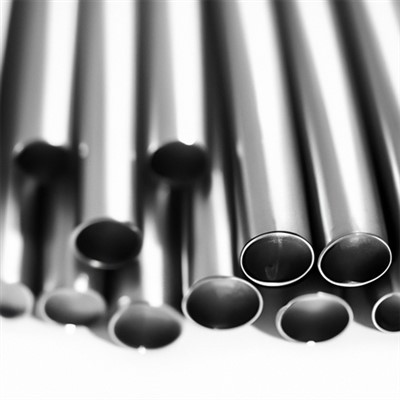
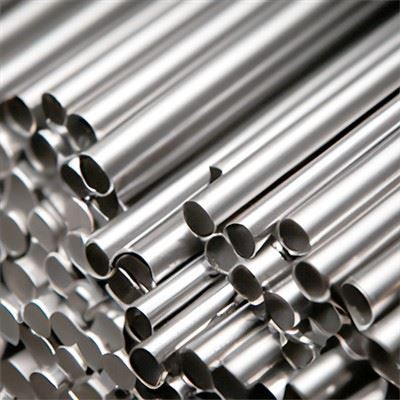
Titanium Pipe
Titanium pipes are a common mill product used in the manufacture of a wide range of products and applications. From medical implants to large industrial heat exchangers, through to use in aircraft component structures.
Advantages
Low Density
Unlike other metals, titanium incorporates a low weight to high strength ratio. The density of titanium is less than stainless steel, nickel and copper, which makes it easier to work with. Despite having such a low density, the titanium tubes are designed to maintain strength and rigidity, offering suitability for various industrial applications.
Durability
Our products can be tailored to suit your specific requirements. As a transition metal, titanium is renowned for its high strength. We supply the titanium tubes for the motorsport industry where strength, power and performance are of utmost importance.
Corrosion Resistance
The titanium tubes are renowned for their ability to resist corrosion and other impacts. Our titanium tubes are manufactured to suit highly corrosive environments, allowing you to maintain a high-quality appearance. Titanium is resistant to corrosion meaning that it suits various outdoor applications and can ultimately prevent rust.
Chemical Resistance
Titanium tubes are not only able to resist corrosion; they’re designed to withstand chemical components too. We supply the titanium tubes in an assortment of grades, ranging from Grade 1 to 12. The titanium tubes we provide are designed to perform effectively, suiting various applications. Incorporating a flexible design and kink resistance; it’s no surprise our titanium tubes are so popular. Your products are protected from chemicals and acids.
Heat Transfer
When it comes to thermal conductivity, you cannot go wrong with the titanium tubes. Our titanium supplies work well under extreme temperatures and pressures so you needn’t worry about getting the most out of your equipment. Whether you’re looking for titanium to suit applications of power generation or sporting equipment, our products are guaranteed to accommodate your specific needs and wants. They’re also suitable for the marine and nuclear industry, where high efficiency is required.
High Performance
We cut all tubes to length and ensure that they’re tailored to suit your unique needs. Titanium is a metal that combines high strength with low density to perform exceptionally well under pressure. As a material of choice, titanium is guaranteed to offer protection when transferring liquids at high speeds.
Efficiency
The titanium tubes that we supply incorporate an oxide coating which forms when the metal is exposed to air at elevated temperatures. In addition to this, the titanium tubes that we supply offer low thermal expansion, preventing any weakening or deformation. You’ll find that the titanium tubes are cost-efficient, they each provide you with the best value for your money.
Titanium Bar
A titanium bar is a metal bar that is specially crafted from Titanium Orch. Titanium is a very lightweight, sleek, and durable metal and is used widely in the manufacturing industries to make products durable, sleek, and long-lasting.
Advantages
Strong and Durable
Titanium round bars are widely used in various industrial applications due to their excellent strength and durability. They are corrosion-resistant and can withstand high temperatures, making them an ideal choice for use in harsh environments. In addition, titanium round bars are lightweight, which makes them easy to handle and transport.
High Strength-to-Weight Ratio
Another benefit of using titanium round bars is their high strength-to-weight ratio. This means that they are stronger than many other materials of the same weight. This makes them ideal for use in applications where weight is a critical factor, such as in the aerospace industry.
Resistant to Fatigue
Another advantage of using titanium round bars is their excellent resistance to fatigue. This means that they can withstand repeated loading and unloading without experiencing any significant deformation or damage. This makes them an ideal choice for use in applications where cyclic loading is a concern, such as in the automotive industry.
Resistant to Corrosion
Titanium round bars are also highly resistant to corrosion. This makes them ideal for use in applications where exposure to corrosive environments is a concern. They are commonly used in the marine industry, where they are exposed to saltwater, and in the chemical industry, where they are exposed to corrosive chemicals.
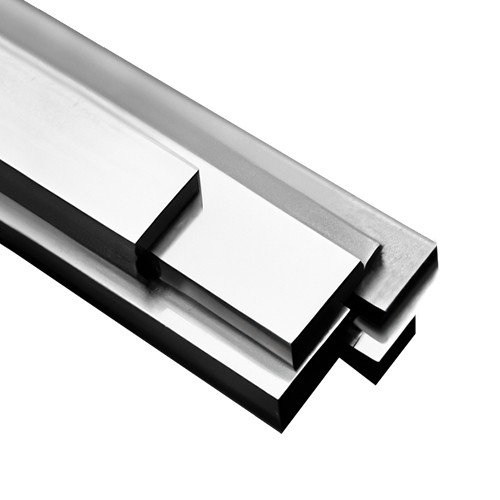
Titanium Plate
Titanium plates are blocks of pure form titanium metal that are thicker than 0.25 inches and are prepared to be used in secondary fabrication processes.
Advantages
Titanium is highly resistant to chemical attack and has the highest strength-to-weight ratio of any metal. These unique properties make Titanium plates suitable for a wide range of applications. It’s stiffness to weight ratio as steel is similar to steel meaning it can be used as a substitute where weight is an important consideration. This is well highlighted in aviation where its use in landing gear and compressor fans has drastically improved thrust to weight ratios. Titanium is highly recyclable which reduces the costs involved in its production. Its inertness means that it can survive weathering and consequentially has a lower lifetime cost that other metals used in architecture and construction.
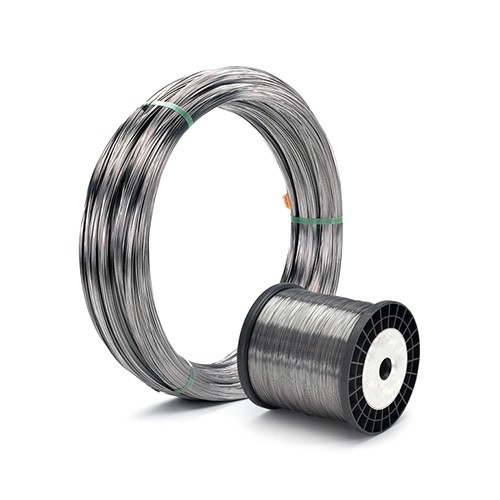
Titanium Wire
Titanium wire is typically used in the chemical processing industry and anodized for hanging parts or components or when an item requires being tied down. Our Titanium wire is also great for racking systems that require strong materials.
Advantages
Durability and Strength
Titanium wire is known for its exceptional strength, making it ideal for use in the aerospace industry. Compared to other materials like stainless steel, titanium wire is stronger and more durable; it also has a high resistance to corrosion, fatigue, and heat, and it can maintain this strength even under extreme temperatures. With such durability, titanium wire is suitable for aircraft components requiring excellent mechanical properties.
Lightweight
Another advantage of using titanium wire in the aerospace industry is its lightweight nature. Compared to other metals typically used in the industry, titanium wire offers a much lower density, which makes it a perfect choice for components that need to be lightweight. This is particularly useful in the aerospace industry, where reducing the overall weight of an aircraft can improve fuel economy and increase efficiency.
High Machinability
The high machinability of titanium wire is another benefit that makes it popular in the aerospace industry. Being a soft metal, titanium wire is easier to shape, forming complex geometries that would otherwise be difficult to achieve with other materials. This capability makes creating customized parts for a specific aircraft possible, reducing the time and cost of manufacturing aircraft parts.
Temperature Stability
When it comes to aircraft components, stability under various temperatures is essential. Titanium wire has a low coefficient of thermal expansion to maintain its shape and size even as temperature changes. This makes titanium wire particularly useful in high-temperature applications or aircraft components subject to sudden and extreme temperature fluctuations.
Resistant to Corrosion
Corrosion is one of the most significant challenges in the aerospace industry, as it can cause structural failure of important aircraft components. Titanium wire is an excellent choice for components exposed to corrosive chemicals or saltwater environments since it boasts a high corrosion resistance.
Processing of Titanium

Extraction
At the start of production, the manufacturer receives titanium concentrates from mines. While rutile can be used in its natural form, ilmenite is processed to remove the iron so that it contains at least 85% titanium dioxide. These materials are put in a fluidized-bed reactor along with chlorine gas and carbon. The material is heated to 1,652°F (900°C) and the subsequent chemical reaction results in the creation of impure titanium tetrachloride (TiCl4) and carbon monoxide. Impurities are a result of the fact that pure titanium dioxide is not used at the start. Therefore the various unwanted metal chlorides that are produced must be removed.
Purification
The reacted metal is put into large distillation tanks and heated. During this step, the impurities are separated using fractional distillation and precipitation. This action removes metal chlorides including those of iron, vanadium, zirconium, silicon, and magnesium.
Alloy Creation
The pure titanium sponge can then be converted into a usable alloy via a consumable-electrode arc furnace. At this point, the sponge is mixed with the various alloy additions and scrap metal. The exact proportion of sponge to alloy material is formulated in a lab prior to production. This mass is then pressed into compacts and welded together, forming a sponge electrode. The sponge electrode is then placed in a vacuum arc furnace for melting. In this water-cooled, copper container, an electric arc is used to melt the sponge electrode to form an ingot. All of the air in the container is either removed (forming a vacuum) or the atmosphere is filled with argon to prevent contamination. Typically, the ingot is remelted one or two more times to produce a commercially acceptable ingot. In the United States, most ingots produced by this method weigh about 9,000 lb (4,082 kg) and are 30 in (76.2 cm) in diameter. After an ingot is made, it is removed from the furnace and inspected for defects. The surface can be conditioned as required for the customer. The ingot can then be shipped to a finished goods manufacturer where it can be milled and fabricated into various products.


Production of the Sponge
Next, the purified titanium tetrachloride is transferred as a liquid to a stainless steel reactor vessel. Magnesium is then added and the container is heated to about 2,012°F (1,100°C). Argon is pumped into the container so that air will be removed and contamination with oxygen or nitrogen is prevented. The magnesium reacts with the chlorine producing liquid magnesium chloride. This leaves pure titanium solid since the melting point of titanium is higher than that of the reaction. The titanium solid is removed from the reactor by boring and then treated with water and hydrochloric acid to remove excess magnesium and magnesium chloride. The resulting solid is a porous metal called a sponge.
Byproducts/Waste
During the production of pure titanium a significant amount of magnesium chloride is produced. This material is recycled in a recycling cell immediately after it is produced. The recycling cell first separates out the magnesium metal then the chlorine gas is collected. Both of these components are reused in the production of titanium.
Maintenance Tips for Titanium Products
Titanium Maintenance & Care
Titanium is one of the coolest metals on earth, but just like any metal, it requires proper care. Titanium is sensitive to oils from your hands and some other elements in the environment, which might seem to discolor or fade the anodized coating, but don’t worry! The anodized coating is just as strong as the metal itself.
Cleaning
When you need to clean your titanium parts, you can use cleaner which is specially formulated to safely clean any titanium without hurting the finish. Alternatively, you can wash the part with soapy water and dry with a microfiber towel. We do not recommend using any harsh chemicals like water spot remover, engine degreaser, or brake parts cleaner. You should also never use any type of metal polish or any acidic cleaner since these can both lighten or completely remove the oxidized layer on the part, leaving it colorless.

Installation
When installing titanium parts, it’s a good idea to wear a set of gloves to keep the oil from your hands off the part. Make sure to clean the part after installation before any heat is applied to ensure the oils are not baked on the part.
Note
Make sure your titanium parts are cool to the touch before attempting to clean them. Spraying water or chemicals on a hot part may cause water spots to appear on the surface, which can be hard to remove without tarnishing the colored finish.
Ultimate FAQ Guide to Titanium Products
As one of the leading titanium manufacturers and suppliers in China, we warmly welcome you to buy high-grade titanium in stock here from our factory. All customized products are with high quality and competitive price. Contact us for quotation.
Titanium Strip, Titanium Sheet, Titanium Forgings For Deep sea Oil