


Custom Titanium Seamless Pipe Supplier
Jeterry Titanium Technology Co., Ltd., founded in June 2012, and is located in the Baoji Hi-tech Development Zone, is a young enterprise mainly engaged in the production and operation of non-ferrous metal titanium-zirconium seamless pipes and aluminum-vanadium alloys. Products are used in the chemical industry, electronics, petroleum, aviation, marine engineering, marine equipment, titanium alloy ingots, etc.
Jeterry Advantages
Advanced Production Equipment
Our company covers an area of more than 2,000 square meters and is equipped with cold rolling mills, high-speed fine boring machines, annealing furnaces, metal band saws, pipe polishers, and other equipment, which can produce high-precision titanium products.
Strong Production Capacity
Our leading steel manufacturer has established strategic cooperation to solve the manufacturing problem of large-diameter steel billets and achieve an annual production capacity of 2,000 tons of tube blanks and 1,000 tons of finished tubes.
OEM Service Available
Free fabric samples, more than 3000 ready-made designs for you to choose from, and OEM solutions for many buyers around the world.
Timely After-Sales Service
Our team has more than 10 years of experience in the field of quality control. At the same time, we provide 24/7 dedicated service and can quickly reply to customers' emails within 12 hours.
-

Ti6Al4V Titanium Seamless Pipe
Jeterry Titanium Technology Co., Ltd., founded in June 2012, and is located in the Baoji Hi-tech
Add to Inquiry -
-
-
Titanium Seamless Pipe for Chemical Industry
Titanium Seamless pipe for chemical industry
Add to Inquiry -
Titanium Seamless Pipe for Seawater Desalination
Titanium Seamless pipe for seawater desalination
Add to Inquiry -
-
-
-
-
-
-


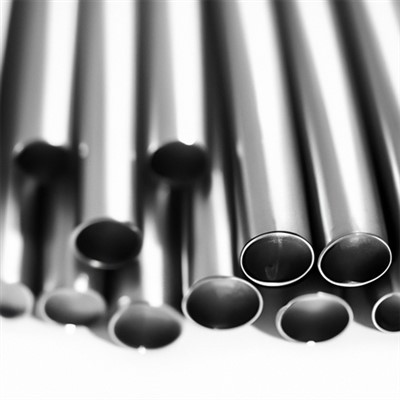
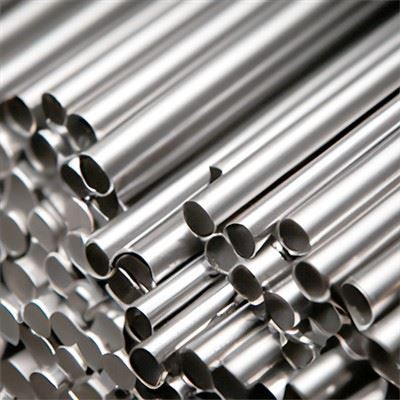


Titanium seamless Pipe

Introduction to Titanium Seamless Pipe
Titanium seamless pipe refers to a type of pipe made from titanium that is manufactured using a seamless process. Titanium is a lightweight, corrosion-resistant metal renowned for its high strength-to-weight ratio and excellent resistance to various chemicals, including saltwater and acids. A seamless steel pipe has no seams, as the name indicates and produced via hot rolling and cold rolling. A welded pipe, on the other hand, is made by rolling of a steel coil to the required gauge thickness, a manufacturing procedure that leaves a seam on the pipe's body.
Corrosion-Resistant
Titanium has excellent resistance to corrosion, even in harsh environments. This makes it ideal for use in applications where corrosion is a concern, such as in the chemical, oil and gas, and marine industries.
High Strength-to-Weight Ratio
Titanium has a high strength-to-weight ratio, which means it is strong but also lightweight. This makes it ideal for use in applications where strength is important but weight needs to be kept as low as possible.
Lightweight
Titanium is one of the lightest metals available, with a density of around 4.5 g/cm³. This makes it an ideal material for applications where weight is a concern.
Biocompatible
Titanium is biocompatible, which means it is not toxic and can be safely used in medical and dental applications. It is frequently used to make surgical implants and prosthetics.
Easy to Fabricate
Titanium is easy to fabricate into a variety of shapes and sizes, including seamless tubes. This makes it a versatile material that can be used in a wide range of applications.
Properties of Titanium Seamless Pipe
Seamless Titanium Pipe Has High Strength
Titanium pipe has high strength. Titanium alloy has very high strength, its tensile strength is 686-1176mpa, and its density is only about 60% of steel, so its specific strength is very high.
The Hardness of Seamless Titanium Pipe is High
The hardness HRC of titanium alloy (as annealed) is 32-38.
The Elastic Modulus of Seamless Titanium Pipe is Low
The elastic modulus of titanium alloy (annealed) is 1.078 × 10-1.176 × 10MPa, about half of that of steel and stainless steel. Executive Standards: ASTM B337, ASTMB338, ASTM B338 B861


Excellent High and Low Temperature Performance
At high temperature, titanium alloy can still maintain good mechanical properties, its heat resistance is higher than that of aluminum alloy, and its working temperature range is wide. At present, the working temperature of the new heat-resistant titanium alloy can reach 550-600 ℃; at low temperature, the strength of titanium alloy is higher than that at normal temperature, and it has good toughness. At – 253 ℃, the low temperature titanium alloy can still maintain good toughness.
Seamless Titanium Pipe Has Strong Corrosion Resistance
When titanium is in the air below 550 ℃, a thin and compact titanium oxide film will form on its surface. Therefore, its corrosion resistance is better than that of most stainless steels in the oxidizing media such as atmosphere, sea water, nitric acid, sulfuric acid and strong alkali. Seamless titanium pipe is made by extrusion technology, and welded titanium pipe is made by welding after plate curling. Generally, the wall thickness of seamless titanium pipe is relatively small, and the caliber is also relatively small.
Grades of Titanium Tubes
There are several different grades of titanium tubes, which are categorized based on the purity and strength of the metal. Some of the most common grades include:
Grade 1
This is the most pure form of titanium, with a composition of 99% titanium. It is very soft and ductile, making it easy to form and weld, but it has low strength.
01
Grade 2
This grade has a slightly higher impurity level than grade 1, at around 0.25%. It has better strength properties than grade 1, but is still relatively soft and easy to form.
02
Grade 5
Also known as Ti6Al4V, this grade contains 6% aluminum and 4% vanadium. It has excellent strength properties and is often used in aerospace and medical applications.
03
Grade 9
Also known as Ti3Al2.5V, this grade contains 3% aluminum and 2.5% vanadium. It has good strength properties and is often used in aircraft components and sporting goods.
04
Grade 23
Also known as Ti6Al4V ELI, this grade is a medical-grade titanium alloy that is biocompatible and has excellent strength properties. It is often used in surgical implants and dental applications.
05
Application of Titanium Seamless Pipe
The seamless titanium pipes are used in different industries and applications thanks to their excellent properties. One of the prominent applications of seamless titanium pipes is in the aerospace and aviation industries. The aerospace and aviation sectors use titanium pipes to fabricate aircraft parts, such as turbine blades, heat exchangers, hydraulic system components, etc. Furthermore, seamless titanium pipes are widely used in chemical processing industries, where the materials must withstand harsh chemicals and environments. They are also used in petrochemical industries to transport corrosive chemicals. Seamless titanium pipes are also used in power generation industries, serving as heat exchangers and steam generator tubes.
Production Process of Titanium Seamless Pipe
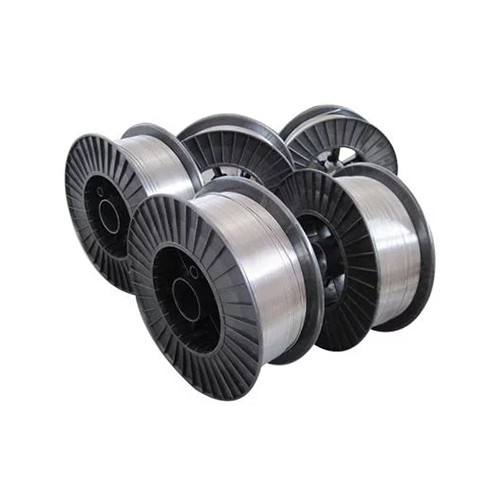

Source Materials
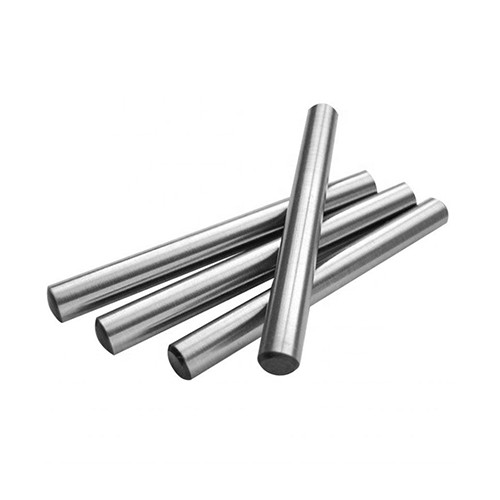
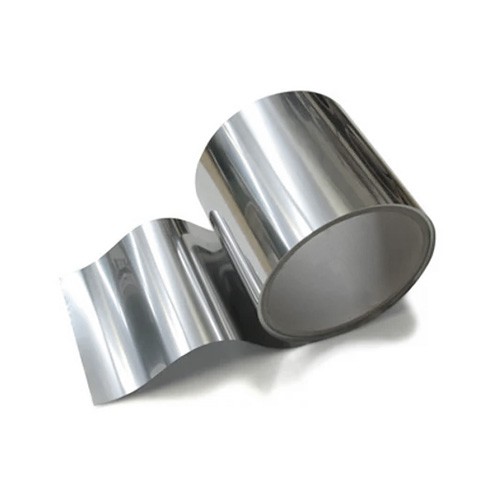
The first step in the manufacturing process of titanium tubes is to source the titanium itself. There are four primary methods for producing titanium, including the Kroll process, the Hunter process, the Armstrong process, and the International Titanium Powder (ITP) process. The Kroll process is the most common method and involves reducing titanium tetrachloride with magnesium. This produces titanium in a sponge-like form that can be melted down and processed further. Alternatively, the Hunter process uses sodium to reduce titanium tetrachloride and produces a highly pure form of titanium that is more expensive. The Armstrong process is similar to the Hunter process, but the reduction reaction uses magnesium instead of sodium. Finally, the ITP process involves using hydrogen to reduce titanium tetrachloride and is commonly used to produce high-purity titanium powders.
Forming the Tube
Once the titanium source material has been obtained, the next step is to form it into tubing. There are several methods for doing this, including hot forming, cold forming, and welding. Hot forming involves heating the titanium to high temperatures and shaping it into tubes using a mandrel. This method is best suited for producing large-diameter tubes. Cold forming is more commonly used for smaller diameter tubes and involves drawing the titanium through a series of dies to shape it into a tube. The process can be either manual or automated using machines such as tube drawing benches or pilger mills. Welding is another method used for forming titanium tubing. This involves joining titanium plates or sheets together using a high-energy source such as lasers, electron beams, or TIG welding. Welded tubes can be produced in various shapes and sizes depending on the welding method used.
Heat Treatment
After the titanium tubing has been formed, it is subjected to heat treatment to improve its mechanical properties. The heat treatment process involves heating the tubing to a high temperature and then cooling it rapidly to create the desired microstructure. The exact temperature and cooling rate used in the heat treatment process will depend on the grade of titanium being used and the desired properties of the tubing. For example, Grade 2 titanium tubing is typically heat treated at temperatures between 720°C to 790°C (1330°F to 1454°F) for one to two hours to improve its ductility and toughness.
Finishing
Once the heat treatment process is complete, the titanium tubing is ready for finishing. This involves cutting the tubing to the desired length, deburring the edges, and polishing the surface to remove any roughness. The level of finishing required will depend on the intended application of the tubing.
Quality Assurance
Finally, the titanium tubing undergoes quality assurance testing to ensure that it meets the required industry standards. This involves testing the tubing for strength, corrosion resistance, and metallurgical structure. Testing is typically performed using non-destructive methods such as ultrasonic testing, X-ray analysis, and visual inspection. Any defects or inconsistencies found during testing are addressed before the tubing is shipped to the customer.
How to Select Titanium Seamless Pipes
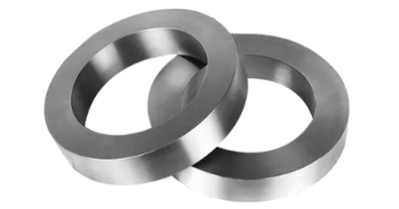
Understand the Application Requirements
The first step in selecting the right seamless titanium pipe for your application is to understand the requirements of the application. For example, you must consider temperature, pressure, and chemical exposure. These factors can impact the type of titanium alloy you need to use and the dimensions of the pipe.
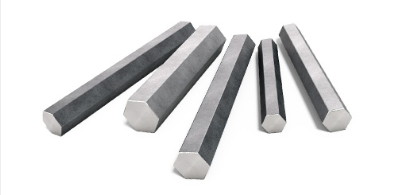
Determine the Appropriate Titanium Alloy
Titanium is available in many different alloys, each with unique properties that impact its suitability for a particular application. For example, you can choose commercially pure titanium (CP), alpha, alpha-beta, and beta alloys. When selecting the appropriate titanium alloy, you must consider factors such as strength, ductility, and corrosion resistance. Consult with a titanium expert to determine the best alloy for your application.
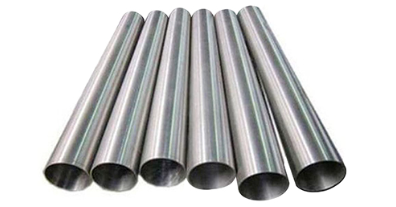
Choose the Right Pipe Dimensions
The dimensions of the seamless titanium pipe you select will depend on the application requirements, including diameter, wall thickness, and length. Consider temperature, pressure, and flow rates when selecting the appropriate dimensions. Additionally, it would be best if you considered factors such as ease of installation, weight, and structural requirements.

Look for Quality Assurance Certifications
When selecting a supplier for your seamless titanium pipe, it is vital to ensure that they have the appropriate quality assurance certifications. Look for suppliers with certifications such as AS9100, which ensures the supplier follows stringent quality control guidelines for aerospace applications. Also, ensure that the supplier has a traceability system to confirm the material’s origin and composition.
Consider the Total Cost of Ownership
Finally, it is essential to consider the total cost of ownership when selecting a seamless titanium pipe. This includes the upfront cost of the pipe, as well as factors such as the lifespan of the pipe, maintenance requirements, and potential downtime costs. Choosing a high-quality titanium pipe can help reduce long-term costs by minimizing maintenance and downtime.
Ultimate FAQ Guide to Titanium Seamless Pipe
As one of the leading titanium seamless pipe manufacturers and suppliers in China, we warmly welcome you to buy high-grade titanium seamless pipe in stock here from our factory. All customized products are with high quality and competitive price. Contact us for quotation.
Titanium Seamless Pipe For Seawater Desalination, Titanium Seamless Pipe For Chemical Industry, Ti Round Seamless Tube