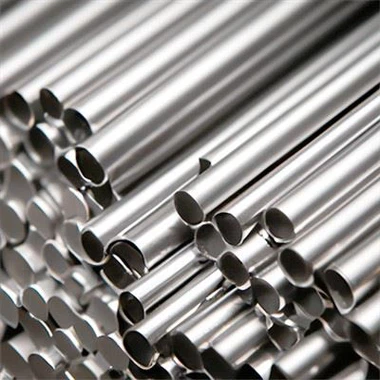
Ti6Al4V Titanium Seamless Pipe
Jeterry Titanium Technology Co., Ltd., founded in June 2012, and is located in the Baoji Hi-tech Development Zone, is a young enterprise mainly engaged in the production and operation of non-ferrous metal titanium-zirconium seamless pipes and aluminum-vanadium alloys. Products are used in the chemical industry, electronics, petroleum, aviation, marine engineering, marine equipment, titanium alloy ingots, etc.
Description

Custom Titanium Seamless Pipe Supplier
Jeterry Titanium Technology Co., Ltd., founded in June 2012, and is located in the Baoji Hi-tech Development Zone, is a young enterprise mainly engaged in the production and operation of non-ferrous metal titanium-zirconium seamless pipes and aluminum-vanadium alloys. Products are used in the chemical industry, electronics, petroleum, aviation, marine engineering, marine equipment, titanium alloy ingots, etc.
Jeterry Advantages
Advanced Production Equipment
Our company covers an area of more than 2,000 square meters and is equipped with cold rolling mills, high-speed fine boring machines, annealing furnaces, metal band saws, pipe polishers, and other equipment, which can produce high-precision titanium products.
Strong Production Capacity
Our leading steel manufacturer has established strategic cooperation to solve the manufacturing problem of large-diameter steel billets and achieve an annual production capacity of 2,000 tons of tube blanks and 1,000 tons of finished tubes.
OEM Service Available
Free fabric samples, more than 3000 ready-made designs for you to choose from, and OEM solutions for many buyers around the world.
Timely After-Sales Service
Our team has more than 10 years of experience in the field of quality control. At the same time, we provide 24/7 dedicated service and can quickly reply to customers' emails within 12 hours.
Titanium Seamless Pipes for Sale Display
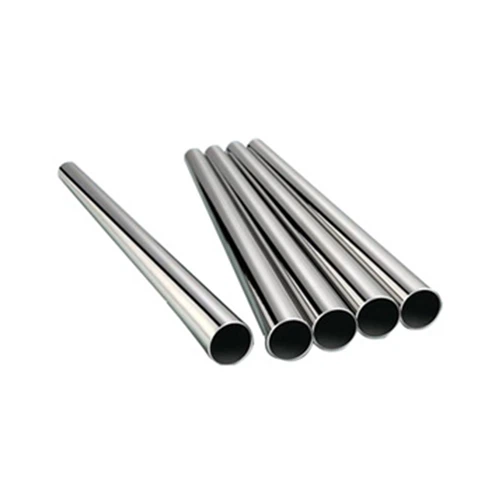
Titanium is highly reactive, and it forms a protective oxide layer when exposed to air or water, which prevents rusting and corrosion. This makes our Titanium Welded Tube ideal for use in harsh environments where other materials might deteriorate quickly.

One of the most notable features of our Ti Round Seamless Tube product is its seamless design. The tube is produced through a process called seamless welding, which yields a tube without any welded seams or joints.

Titanium Grade 1 Seamless Pipe
Our Titanium Grade 1 Seamless Pipe features a uniform wall thickness and is free from any defects such as cracks, seams or pores. It is extruded from titanium billets using advanced hot extrusion technology, ensuring a smooth inside diameter and a continuous pipe length.

Ti6Al4V Titanium Seamless Pipe
Made of high-purity titanium alloy and produced by advanced processing techniques, our Ti6Al4V titanium seamless pipe is designed to meet or exceed the international standards of ASTM B861, ASTM B862, ASTM B338, and ASME SB861.

Titanium Seamless Pipe for Chemical Industry
Our Titanium Seamless Pipe For Chemical Industry is designed to withstand extreme temperatures and pressures while maintaining their high level of corrosion resistance. Due to their superior strength-to-weight ratio, our titanium seamless pipes are widely used in demanding applications such as aerospace and marine industries.
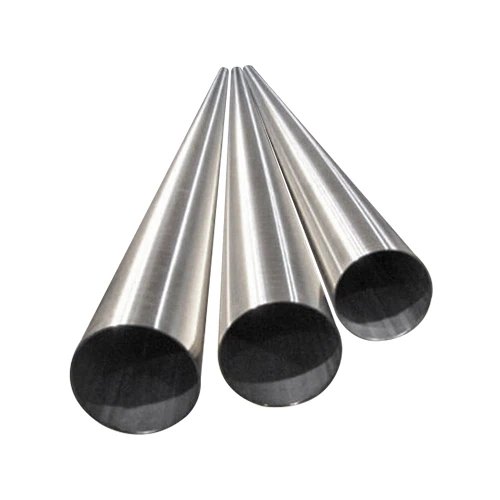
One of the most impressive features of our Larger Titanium Seamless Pipe is its exceptional resistance to corrosion. This is due to the unique properties of titanium, which makes it highly resistant to corrosion, even in tough environments where other metals may corrode much faster.

Titanium Gr12 welded tube is made from a blend of titanium, aluminum, and vanadium alloy. What sets it apart from other titanium alloys is its high resistance to corrosion and excellent strength-to-weight ratio. It has become a popular choice for industrial applications, including aerospace, medical, and aviation industries.

Our Titanium Alloy Welded Tube is made from the highest-quality materials available in the market. Our welding techniques are also executed with precision to deliver tubes that are free from any defects and possess uniform quality throughout the length of the tube.

Titanium Seamless Pipe For Seawater Desalination
Titanium is well known for its remarkable corrosion resistance properties. So our Titanium Seamless Pipe For Seawater Desalination is resistant to a wide range of corrosive environments, including seawater, brine, and chemicals that are typically used in desalination plants.

Titanium Seamless Pipes are made up of different grades of titanium alloys. There are commercially pure grades of titanium and alloyed grades. A Titanium Piping System is very often specified for highly-corrosive industrial applications and frequently specified in processes where chlorides are a component.
Benefits of Titanium Seamless Pipe
Lightweight
Titanium is known for its exceptional strength-to-weight ratio. seamless tubes made from titanium are significantly lighter than tubes made from other metals such as steel or stainless steel. This makes them ideal for applications where weight reduction is important, such as aerospace, automotive, and sports equipment.
Corrosion Resistance
Titanium has excellent corrosion resistance, even in highly corrosive environments such as seawater and chemical processing plants. seamless tubes are highly resistant to corrosion, which increases their lifespan and reduces maintenance costs compared to other materials.
High Strength
Despite its lightweight nature, titanium is incredibly strong. seamless tubes can withstand high levels of stress and pressure, making them suitable for applications that require structural integrity and reliability.
Temperature Resistance
Titanium exhibits impressive heat resistance, allowing seamless tubes to perform well in extreme temperature conditions. They can withstand both high and low temperatures without losing their mechanical properties, making them suitable for applications in aerospace, power generation, and chemical industries.
Biocompatibility
Titanium is biocompatible, meaning it is non-toxic and does not cause adverse reactions when in contact with living tissues or bodily fluids. This property makes seamless tubes suitable for medical and dental applications, such as implants and surgical instruments.
Excellent Formability
Titanium can be easily formed into various shapes, including seamless tubes, due to its excellent formability. This allows for greater design flexibility and customization to meet specific application requirements.
Longevity
Titanium seamless tubes have a long lifespan due to their resistance to corrosion, fatigue, and wear. They require minimal maintenance and have a low risk of failure, resulting in cost savings over their lifetime.
Application of Titanium Seamless Pipe

Power Generation
Titanium pipes can play a significant role in high-temperature water and steam environments. Grade-2 titanium has already been used in many power plants to handle the problems associated with the failure of condenser and boiler tubes.

Chemical Processing
Highly corrosive environments, such as those commonly found in the chemical processing industry, demand piping systems, heat exchangers, and other systems that are capable of handling high loads. With superior corrosion resistance, titanium can endure high stresses for a long period in extreme environments.

Aerospace
Titanium can be used in airframe and engine components for the aerospace industry. Titanium pipes are capable of handling high temperatures without creep. With superior resistance to crack growth and fatigue, the lightweight pipes are recognized for their high strength-to-density ratio.
Oil and Gas
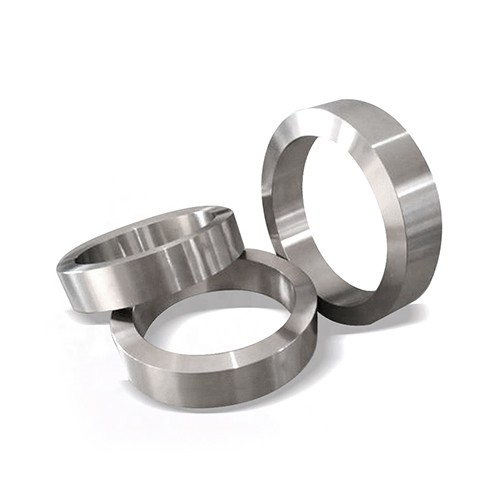
High pressure, high temperature (HPHT) applications such as oil and gas well applications demand piping capable of enduring constant use. The oil and gas industry also needs high corrosion resistance of titanium in areas including downhole, subsea and topside.
Production Process of Titanium Seamless Pipe
Raw Material Extraction:
Titanium is extracted from naturally occurring minerals like rutile and ilmenite. The first step is to obtain titanium dioxide (TiO2) from these ores through a process known as the Kroll process or the Hunter process.
Reduction of Titanium Tetrachloride (TiCl4):
Titanium tetrachloride is derived from titanium dioxide and is reduced to produce metallic titanium. This reduction typically involves reacting TiCl4 with magnesium (Mg) in a controlled atmosphere.
Melting and Alloying:
Once the titanium is obtained, it is melted in an electric arc furnace or a vacuum arc furnace. Alloying elements, such as aluminum (Al), vanadium (V), or nickel (Ni), are added in precise proportions to create the desired titanium alloy composition. The specific alloy composition will depend on the intended application of the pipe.
Ingot Formation:
The molten titanium alloy is cast into ingots or billets of various sizes and shapes. These ingots serve as the raw material for further processing.
Forging or Extrusion:
In the case of large-diameter pipes, the ingots are typically forged or extruded into the desired pipe shape. Forging involves compressing the heated ingot between two dies to shape it, while extrusion involves pushing the heated material through a die to form a pipe shape.
Heat Treatment:
After forging or extrusion, the titanium alloy pipes are subjected to heat treatment processes to optimize their mechanical properties and eliminate internal stresses. Annealing and solution heat treatment are common methods used to achieve this.
Cold Working (Optional):
Depending on the required dimensions and properties, the pipes may undergo cold working processes like cold rolling or cold drawing to achieve the desired dimensions and surface finish.
Machining and Finishing:
The pipes may be machined to precise tolerances, and the surface finish is improved through processes like turning, milling, or polishing.
Quality Control:
Throughout the production process, rigorous quality control measures are in place to ensure that the pipes meet the specified standards and requirements. This includes testing for mechanical properties, non-destructive testing (e.g., ultrasonic testing), and chemical composition analysis.
Final Inspection and Packaging:
Once the pipes pass quality control checks, they are inspected for defects and compliance with customer specifications. They are then packaged and prepared for shipment to customers.
How to Select Titanium Seamless Pipes


Grade 1
The softest grade, i.e, Grade 1, makes it exceedingly formable. High ductility is provided while retaining the required impact toughness. The most common applications for this grade include plates, tubing, piping, and several other materials where improved formability and weldability are crucial. Because of its properties, this titanium is employed in a wide range of industries; aerospace, medicine, marine, architecture, manufacturing, electricity, chemical processing facilities, desalination, and automobile parts to name some of them.
Grade 2
Grade 2 titanium is a little bit stronger metal. Even though it has higher tensile strength, it is still quite moldable. Because it is so widely accessible, grade 2 titanium is less expensive than other grades. The typical product forms range from plate and wire to bar and billet. Uses include generating power and exhaust pipe for hydrocarbon processing.
Grade 3
It has a good weldability rating, is stronger than grades 1 and 2, and has very high corrosion resistance. While less moldable than the other two classes, it is a suitable option for the following because of its increased strength and resistance. Some common industries comprise aerospace applications and marine applications.
Grade 4
The strongest pure grade of titanium is grade 4, yet it is also the least moldable. However, due to its excellent strength, durability, and weldability, it has high cold formability and is used in a wide range of medical and industrial applications. The following products often contain grade 4 titanium surgical supplies and heat exchangers. To create titanium alloys metals like tin, palladium, silicon, vanadium, molybdenum, zirconium, manganese, iron, cobalt, nickel, copper, and chromium are some examples of one or two other metals that can be combined with titanium. The strength, corrosion resistance, durability, and light weight of titanium alloys are identical. To those of commercially pure titanium, however certain properties can be improved upon.
Grade 5
Grade 5 is particularly corrosion resistant, durable, lightweight, and can withstand temperatures up to 600 degrees Fahrenheit. The elements titanium, aluminum, vanadium, and iron are combined to make them. Grade 5 is widely utilized in the aerospace sector for structural and aircraft turbine parts, as well as for high-performance engine components, athletic equipment, and biomedical implants, among other things. Bar, billet, foil, sheets, seamless pipes, wire, plates, and more are examples of common product forms.
Grade 7
The grade of titanium alloys that resist corrosion is the best in grade 7. The majority of the qualities of grade 2 pure titanium are present, but the palladium addition improves its formability and weldability. It is offered in the majority of product types and is most frequently employed in machinery for producing chemicals.
Grade 12
Grade 12 is a solid option for a variety of fabricated applications because of its comparable strength to the 300th steel, outstanding formability, and excellent weldability. Because of its great corrosion resistance, it is frequently chosen for maritime applications, chemical manufacturing, and heat exchange applications in aerospace.
Grade 23
Grade 23 is frequently formed into coils, strands, wires, or flat wires. It is constructed of titanium, vanadium, and aluminum, which reduces its ductility and weldability while giving it an extremely high tensile and yield strength. It is widely used in a variety of medical and dental procedures, such as medical staples, pins, screws, etc. Additionally, it has found use in ballistic armor and airframe components.
Ultimate FAQ Guide to Titanium Seamless Pipes
Hot Tags: ti6al4v titanium seamless pipe, China ti6al4v titanium seamless pipe manufacturers, suppliers, factory, Larger Titanium Seamless Pipe, Titanium Grade 1 Seamless Pipe, Seamless Pipe Astm B861, Titanium Seamless Pipe For Chemical Industry, Titanium Gr12 Welded Tube, Ti6Al4V Titanium Seamless Pipe